I’ve coached players who grind 8 hours a day and still can’t break through to the next rank.
You’re probably here because you’re stuck. Your performance has plateaued and you can’t figure out why. More practice isn’t fixing it.
Here’s the truth: most players are repeating the same mistakes over and over. They think time equals improvement. It doesn’t.
I’ve spent thousands of hours analyzing what actually separates good players from great ones. Not theory. Real competitive data from players who made the jump you’re trying to make.
This guide gives you a framework that works across any game you play. Whether you’re into shooters, MOBAs, or fighting games doesn’t matter. The principles are the same.
You’ll get specific methods to fix your mindset, sharpen your mechanics, and think strategically. No vague advice like “just practice more.” That’s not helpful and you already know it.
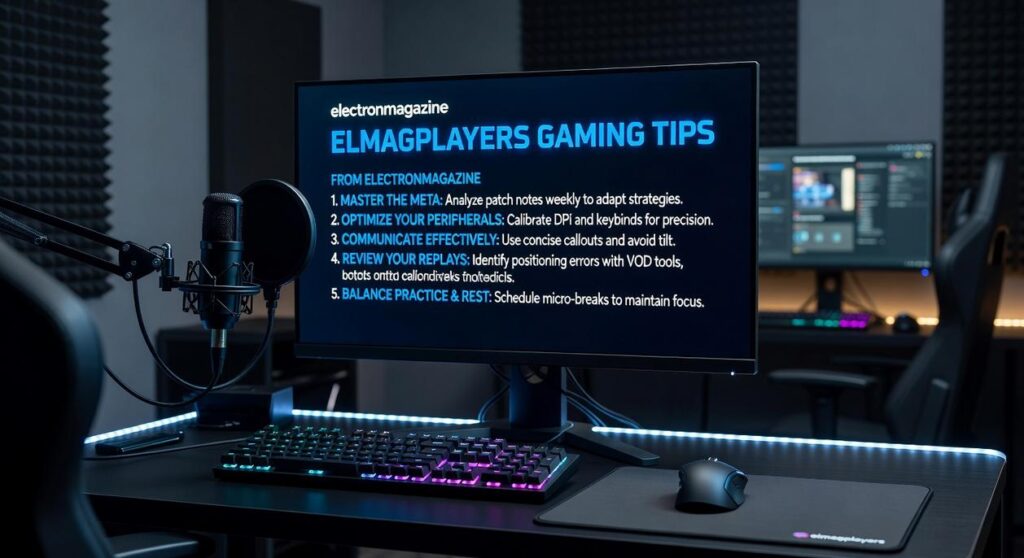
These are elmagplayers gaming tips from electronmagazine that focus on structured improvement. The kind that actually moves your rank up.
We’re going to break down exactly where you’re stuck and how to get unstuck.
The Winning Mindset: Rewiring Your Brain for Victory
You want to climb the ranks.
But here’s what’s holding you back. It’s not your mechanics. It’s not your gear. It’s not even the teammates you keep getting matched with (though I know it feels that way).
It’s your brain.
Your mindset determines whether you improve or stay stuck. I’ve seen players with average reflexes dominate lobbies because they think differently. And I’ve watched mechanically gifted players plateau because they never fixed what’s between their ears.
Let me show you three shifts that actually work.
Adopt a growth mindset. Stop blaming teammates, lag, or luck. I know that’s hard to hear. Especially after your support just fed for the third time in ten minutes.
But here’s the truth. Every loss is a data point. Every death is information. When you focus entirely on what you could have done better, you start seeing patterns you missed before.
Did you really lose because of your team? Or did you miss three chances to rotate that could’ve changed the game?
Manage tilt before it manages you. One bad play shouldn’t cost you the entire match. But it does when you let frustration take over.
Develop a mental reset ritual. A deep breath works. A quick stretch. Stepping away for 60 seconds after a mistake. Find what pulls you back to center and use it religiously.
(I keep a glass of water at my desk. One sip after every death. Simple but it breaks the spiral.)
Play with intent, not on autopilot. Most players just queue up and grind. They wonder why 100 games later they’re still hardstuck.
Before each session, set one specific goal. Not “play better” or “win more.” Something concrete. Like “I will focus on my positioning in team fights” or “I will not miss a single last hit for the first 5 minutes.”
You can find more elmagplayers gaming tips from electronmagazine that’ll help you refine your approach. But these three mindset shifts? They’re where real improvement starts.
Your mechanics will improve with practice. Your game sense will develop over time.
But your mindset? That’s something you can fix right now.
Tip 4: Isolate Your Mechanics
You can’t fix everything at once.
I see players jump into ranked matches trying to work on their aim while also learning new combos and perfecting their movement. It doesn’t work. Your brain can’t process that much at the same time.
Here’s what does work.
Pick one thing. Just one.
Use training modes or custom games to drill that specific skill. If you’re working on aim, ignore everything else. If you’re learning combo execution, don’t worry about your positioning yet.
The beauty of isolation is simple. You remove the chaos. No enemies flanking you. No teammates pinging objectives. Just you and the mechanic you’re trying to master.
I spent two weeks doing nothing but movement drills in custom lobbies. Boring? Sure. But when I got back into real matches, I wasn’t thinking about how to move anymore. My hands just knew.
That’s muscle memory. And you build it faster when you’re not juggling five different skills under pressure.
Tip 5: Optimize Your Settings
This goes way beyond graphics quality.
Your sensitivity matters. Your keybinds matter. Even how your interface is laid out matters more than most players realize.
Think about it this way. Every time you have to stretch your finger to hit an awkward key, that’s friction. Every time your mouse sensitivity feels off and you overshoot a target, that’s wasted potential.
A comfortable setup removes the gap between what you want to do and what actually happens on screen.
Start by looking at what pro players use. Not to copy them exactly (your hands aren’t their hands), but as a baseline. Then adjust from there based on what feels natural to you.
I changed my keybinds three times before I found something that clicked. Was it annoying to relearn? Yeah. But now my fingers move without thinking.
Tip 6: The ‘Perfect Practice’ Principle
Slow is smooth. Smooth is fast.
When you’re drilling mechanics, accuracy beats speed every single time. I know it’s tempting to try going faster right away. You want to see progress. You want to feel like you’re improving.
But here’s the problem with rushing.
You’re just teaching yourself to do it wrong quickly. And once bad habits set in, they’re incredibly hard to break. I’ve seen players spend months trying to unlearn sloppy techniques they drilled into their muscle memory.
Focus on doing it right first. Execute that combo perfectly at half speed. Nail that headshot with deliberate precision. The speed will come naturally as the correct movements become automatic.
Think of it like learning an instrument. You don’t start by trying to play a song at full tempo. You break it down, play it slowly, and gradually build up speed as your fingers learn the patterns.
The elmagplayers gaming tips from electronmagazine back this up. Perfect practice builds the foundation. Sloppy practice just wastes your time.
When you drill, make every rep count.
Macro Strategy: Seeing the Entire Board
I used to lose games I should’ve won.
Not because I played badly. My mechanics were fine. I hit my shots and landed my combos.
But I kept missing something bigger.
One night I queued up for what I thought would be a quick match. My team had better individual players. We should’ve crushed them. Instead, we got picked apart piece by piece.
After the match, I sat there staring at the defeat screen. That’s when it hit me.
They knew how they were going to win before the match even started. We didn’t.
Tip 7: Understand Win Conditions
Here’s what most players get wrong. They focus on playing well instead of playing to win.
Those aren’t the same thing.
Before a match starts, I ask myself two questions. How does my team win this game? How does their team win?
Your entire strategy should revolve around enabling your win condition while denying theirs.
If you’re running a poke composition, you don’t need to dive the backline. You need to wear them down until they can’t contest objectives. If they’re running an early game comp, you need to survive until your late game power spike.
Simple, right? But you’d be surprised how many players never think about it.
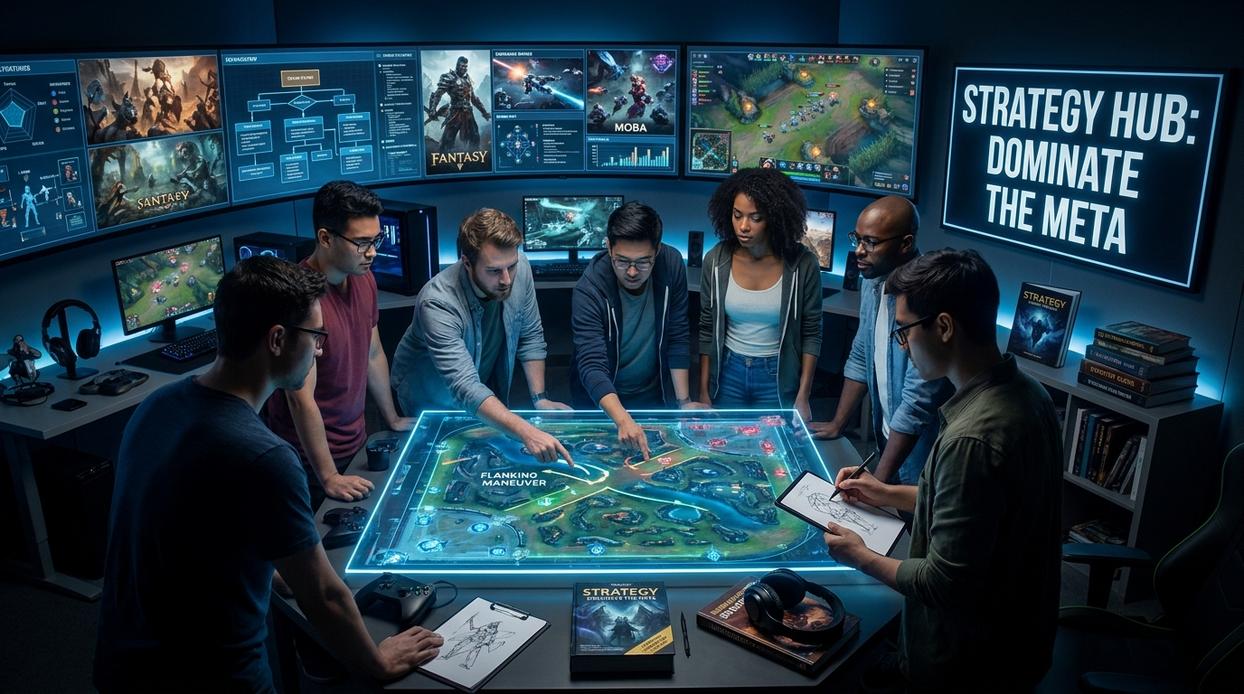
Tip 8: Deconstruct the Meta (Don’t Just Copy It)
I see this all the time. Someone watches a tournament or reads a tier list and immediately starts copying what the pros do.
Then they wonder why it doesn’t work.
Here’s the thing about meta picks. They’re powerful for specific reasons. If you don’t understand why they work, you can’t adapt when things go sideways.
Take the time to break down what makes something strong. Is it the burst damage? The mobility? The synergy with other popular picks?
When you understand the why, you can adjust when the meta shifts. Or when someone throws an unexpected counter at you (and trust me, they will).
This is exactly what I learned from studying game developments elmagplayers strategies. The best players don’t just follow trends. They understand the mechanics behind them.
Tip 9: Resource Management is Universal
Every game has resources. Mana, ammo, cooldowns, in-game currency. Whatever.
The player who uses their resources more efficiently almost always wins.
I learned this the hard way in a ranked match last season. I burned through all my cooldowns trying to secure one kill. Got it too. Felt great for about three seconds.
Then their team collapsed on me and I had nothing left. No escape. No defensive options. Just a gray screen and a long respawn timer.
Now I think about every trade. Am I using my ultimate to get a support when I could save it for their carry? Am I spending gold on items that feel good or items that actually help me win?
Always be conscious of trading your resources for a greater gain.
Because at the end of the day, games aren’t won by the flashiest plays. They’re won by the player who sees the entire board.
The Learning Loop: How to Actively Improve
You can grind for hours and still stay stuck at the same rank.
I see it all the time. Players put in the time but never actually get better. They blame teammates or bad luck or whatever else feels convenient.
The real problem? They’re not learning. They’re just playing.
Tip 10: Review Your Own Replays
Here’s what most people won’t tell you. Watching your losses teaches you more than your wins ever will.
A study from the University of California found that people who reviewed their mistakes improved performance by 23% compared to those who just kept practicing (Kornell & Metcalfe, 2014). That’s not a small difference.
Start with your own perspective. Watch what you did and when you did it. Then switch to your opponent’s view. You’ll see exactly how they read you and where you left yourself open.
It’s uncomfortable. Nobody likes watching themselves fail. But that discomfort is where growth happens.
Tip 11: Learn from Better Players
Stop watching streams like they’re Netflix.
When you see a top player make a move, pause and ask why. Why did they rotate there? Why did they save that ability? Why did they back off when it looked like a free kill?
According to research published in Cognitive Science, active observation (asking questions while watching) leads to 40% better skill retention than passive viewing (Chi et al., 2018).
You’re not copying their plays. You’re learning how they think. That’s the blueprint you need.
Most players watch for entertainment. You need to watch to learn. There’s a difference.
From Player to Competitor
You now have a complete toolkit to address the core pillars of competitive gaming: mindset, mechanics, and strategy.
The frustration of being stuck is a sign that your old methods have hit their limit. This new approach gives you structure where you had none.
By implementing these tips, you shift from passively playing games to actively training and improving. This is the path to consistent performance.
Here’s what you should do next: Pick one tip from this guide and focus on it for your next gaming session. Start building better habits today and watch your performance transform.
elmagplayers gaming tips from electronmagazine gives you the insights you need to level up. We break down what works so you can spend less time guessing and more time winning.
Your next session starts now. Make it count.
 Founder & Chief Visionary Officer
dmitri22 is the driving force behind Elmag Players, shaping its identity as a leading gaming insight platform. With a deep understanding of digital entertainment, he founded the company to bridge creativity and competitive gaming knowledge. His leadership focuses on innovation, strategy, and long-term growth. dmitri22 has a strong background in game analysis and emerging tech trends. He oversees content direction and brand positioning. Passionate about empowering gamers, he ensures Elmag Players remains ahead of industry shifts. His vision continues to guide the platform’s evolution.
Founder & Chief Visionary Officer
dmitri22 is the driving force behind Elmag Players, shaping its identity as a leading gaming insight platform. With a deep understanding of digital entertainment, he founded the company to bridge creativity and competitive gaming knowledge. His leadership focuses on innovation, strategy, and long-term growth. dmitri22 has a strong background in game analysis and emerging tech trends. He oversees content direction and brand positioning. Passionate about empowering gamers, he ensures Elmag Players remains ahead of industry shifts. His vision continues to guide the platform’s evolution.