
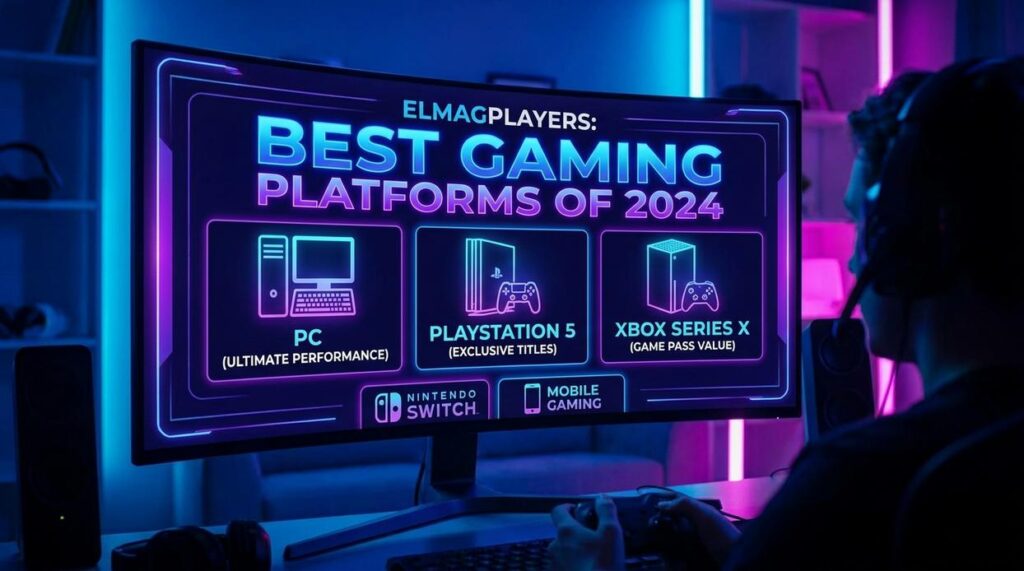
I’ve tested every major gaming platform that claims to offer serious competitive play.
You’re trying to figure out where to invest your time and which platform will actually give you a fair shot at climbing the ranks. The wrong choice means lag, toxic communities, and wasted hours.
Here’s the reality: not all platforms are built for competition. Some are designed for casual play dressed up with ranked modes that don’t mean much.
I spent years grinding across these platforms. I know which ones have the infrastructure for real competitive gaming and which ones fall apart when it matters.
This guide breaks down the best gaming platforms elmagplayers use when stakes are high. I’ll show you what separates a casual playground from a true battleground.
We’re looking at server stability, matchmaking quality, anti-cheat systems, and community standards. The stuff that actually affects your win rate.
You’ll learn which platforms respect your time and which ones waste it. Where the competition is legitimate and where it’s just noise.
No fluff about features you’ll never use. Just the criteria that matter when you’re trying to win.
The Anatomy of a Top-Tier Competitive Platform
You know that feeling when you’re in the zone?
Your fingers move before you think. Every input registers instantly. The match feels tight and you can actually tell you’re playing against someone at your level.
That’s what separates the best gaming platforms elmagplayers from the rest.
But here’s where most people get it wrong. They think a good competitive platform is just about having popular games. That’s like saying a race car is good because it looks cool.
What actually matters is what’s under the hood.
Skill-Based Matchmaking & Ranking Systems
First up is how the platform pairs you with opponents. You want that sweet spot where you’re challenged but not crushed. Where wins feel earned and losses teach you something.
The sound of a fair match is different. You hear both teams trading kills back and forth instead of one side steamrolling.
Anti-Cheat & Fair Play
Nothing kills the competitive vibe faster than cheaters. You’re lining up a shot and suddenly someone snaps to your head through a wall. Your stomach drops because you know what just happened.
Top platforms don’t just detect cheats. They act fast and make examples.
Network Performance & Latency
This is where you feel the difference in your hands. On a solid platform, your character moves the instant you press a key. The game responds like it’s reading your mind.
Bad servers? You get that sinking feeling when you press a button and nothing happens for a split second. Or you see yourself die behind cover because the server disagreed with what you saw on screen.
Player Population & Community
Walk into a lobby on elmagplayers and you can sense if a community is alive. Queue times tell you everything. Under 30 seconds? Healthy. Over two minutes? You might want to look elsewhere.
These four pillars work together. Miss one and the whole experience falls apart.
PC Platforms: The Pinnacle of Precision and Customization
You want control?
PC gives you that. More than any console ever will.
I’m talking about the kind of precision that turns a good player into a great one. The difference between landing a headshot and watching the killcam in frustration.
Some people argue that consoles have closed the gap. They point to higher frame rates on the PS5 and Xbox Series X. They say controller aim assist levels the playing field.
They’re missing the point.
PC isn’t just about raw power (though that helps). It’s about choice. You pick your hardware. You adjust your settings down to the millisecond. You control everything.
And when you’re serious about competitive gaming, that matters.
The best gaming platforms elmagplayers rely on aren’t just powerful. They’re flexible. That’s why PC dominates in esports circles where careers are on the line.
Let me break down what actually makes PC platforms work for competitive play.
Steam: The Unrivaled Behemoth
Steam owns the PC gaming space. Period.
The library alone is staggering. CS:GO and Dota 2 built their entire competitive scenes here. Millions of players grinding ranks every single day.
But here’s what I really appreciate about Steam. The community features actually work. You need a guide for a specific map callout? It’s there. Want to find players at your skill level? The forums deliver.
And those sales? They let you build a competitive library without emptying your wallet.
Now, I won’t pretend Steam is perfect. VAC (their anti-cheat system) gets bypassed more often than it should. You’ll run into cheaters. It happens.
Plus, your performance depends entirely on how well the developer optimized their game. Steam doesn’t fix bad code.
Dedicated Launchers: Riot Games & Battle.net
Here’s where things get interesting.
Riot and Blizzard took a different approach. They built closed systems for their own games. Valorant, League of Legends, Call of Duty. All running on launchers designed specifically for them.
The result? Games that run smoother than almost anything on Steam.
Vanguard and Ricochet (their anti-cheat systems) are aggressive. Some would say too aggressive. But they work. Cheaters get caught fast.
When I’m playing Valorant, I know the game is optimized for exactly what I’m doing. No guessing about settings. No wondering if my hardware will cooperate.
The tradeoff is obvious though.
You’re stuck with whatever that publisher offers. Want to play something outside their catalog? You’re opening another launcher. Your friends list doesn’t carry over. Your achievements don’t matter anywhere else.
It’s the price you pay for polish.
For competitive players, PC platforms give you what consoles can’t. The ability to fine-tune everything until it feels right. Whether you’re grinding on Steam or locked into a dedicated launcher, you’re getting the tools to compete at the highest level.
Just know what you’re signing up for with each one.
Console Ecosystems: Accessibility and Plug-and-Play Competition
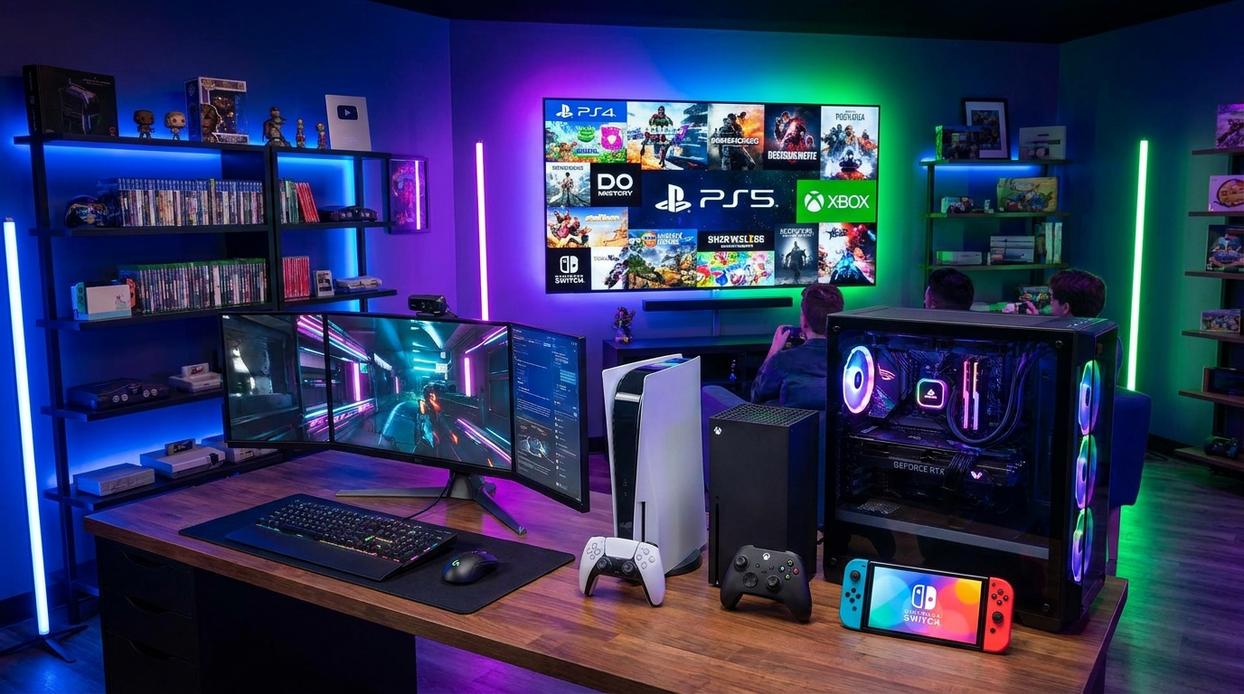
You don’t need a degree in computer science to compete on consoles.
That’s the whole point.
While PC gamers spend hours tweaking settings and upgrading parts, console players just turn the thing on and play. Everyone’s running the same hardware. Same frame rates. Same load times (mostly).
Some people argue this limits your potential. They say you need customization to truly compete at the highest level.
But here’s what they’re missing.
Standardization is actually an advantage when you’re trying to build real competitive skill. You’re not wondering if someone beat you because they have better equipment. You lost because they outplayed you.
Let me break down what makes consoles work for competitive gaming.
PlayStation Network (PSN)
PSN connects millions of players worldwide. If you’re into fighting games, you already know this is where the action happens.
Street Fighter tournaments? Most of them run on PlayStation. The community built itself here over years, and that’s not changing anytime soon.
The platform has built-in tournament features that actually work. You can organize brackets, set up matches, and track results without jumping through hoops.
But you’re paying for it. PS Plus subscription is required for online play. No way around that.
And if you want to swap out your controller or modify your setup? Your options are limited compared to what PC offers.
Xbox Network
Microsoft built something reliable here.
I’m talking about connection stability that doesn’t make you want to throw your controller through the window. Xbox Network has a reputation for smooth online play, and in my experience, it’s earned (though your mileage may vary depending on your internet).
Game Pass changes the math for competitive players. You get access to hundreds of games for a monthly fee. Want to practice every Halo title? They’re all there.
The catch? Same as PlayStation. You need a subscription to play online.
And while Xbox has strong competitive titles, the exclusive lineup doesn’t match PlayStation’s variety in certain genres. If you’re chasing fighting game tournaments or specific competitive scenes, you might find yourself looking elsewhere.
The best gaming platforms elmagplayers depends on what you value. Consoles remove the technical barriers. You focus on getting better instead of troubleshooting your rig.
That’s worth something.
The Cross-Platform Revolution: Uniting the Player Base
You want to play with your friends.
Sounds simple, right? But for years, it wasn’t. Your buddy on PlayStation couldn’t squad up with you on PC. Console wars meant divided player bases and longer wait times.
Those days are mostly over.
The New Normal
Games like Fortnite, Apex Legends, and Call of Duty: Warzone don’t care what hardware you own. They run on their own account systems (Epic Games Account, Activision ID) that work everywhere.
This is what the best gaming platforms elmagplayers community has been asking for. And we finally got it.
Here’s what this means for you. You get shorter queue times. Way shorter. When the entire player base pools together instead of splitting across platforms, matchmaking happens in seconds instead of minutes.
You play with whoever you want. Your friend on Xbox? No problem. Someone else on Switch? They’re in too.
Some people argue that cross-play creates unfair advantages. PC players have better aim with a mouse. Console players get aim assist. It’s not a level playing field, they say.
Fair point. But here’s what they’re missing.
Most games let you opt out if you want. And the benefit of actually finding matches quickly with a healthy community? That outweighs the occasional skill gap between input methods.
Take the Epic Games Store. Sure, it’s a PC storefront. But its real power comes from running Fortnite’s cross-platform infrastructure. That’s millions of players across every device you can think of.
Your platform choice now comes down to preference. Do you like a controller or keyboard? What’s your budget? How important are graphics settings to you?
The players are everywhere. You just pick how you want to join them.
Your Ideal Platform Depends on Your Competitive Priorities
I’ve broken down the top platforms for you.
We looked at matchmaking quality, anti-cheat systems, and raw performance. Now you know where each platform stands.
Your real challenge isn’t picking the “best” platform. It’s matching your needs with the right setup.
Do you want maximum control and the highest skill ceiling? PC gives you that. You’ll get better frame rates, faster response times, and more customization than you’ll find anywhere else.
Want something more accessible with a level playing field? PlayStation and Xbox deliver that standardized experience. Everyone’s on similar hardware and the barrier to entry is lower.
Here’s what matters most: Pick your competitive game first.
Then go where that game’s community is strongest. Check where the best gaming platforms elmagplayers support fair matches and smooth infrastructure.
The platform with the most active players in your game is usually your best bet. That’s where you’ll find the competition that pushes you to improve.
Don’t overthink this. Choose based on where you’ll actually play, not where you think you should play.
Your next match is waiting.
 Founder & Chief Visionary Officer
dmitri22 is the driving force behind Elmag Players, shaping its identity as a leading gaming insight platform. With a deep understanding of digital entertainment, he founded the company to bridge creativity and competitive gaming knowledge. His leadership focuses on innovation, strategy, and long-term growth. dmitri22 has a strong background in game analysis and emerging tech trends. He oversees content direction and brand positioning. Passionate about empowering gamers, he ensures Elmag Players remains ahead of industry shifts. His vision continues to guide the platform’s evolution.
Founder & Chief Visionary Officer
dmitri22 is the driving force behind Elmag Players, shaping its identity as a leading gaming insight platform. With a deep understanding of digital entertainment, he founded the company to bridge creativity and competitive gaming knowledge. His leadership focuses on innovation, strategy, and long-term growth. dmitri22 has a strong background in game analysis and emerging tech trends. He oversees content direction and brand positioning. Passionate about empowering gamers, he ensures Elmag Players remains ahead of industry shifts. His vision continues to guide the platform’s evolution.