
I’ve tested hundreds of games before they ever reached your screen.
You’re probably wondering why some games feel polished while others launch broken. The difference isn’t always budget or talent. It’s what happens in the space between design and release.
Most developers know what they want to build. But translating that vision into something players actually enjoy? That’s where things fall apart.
Here’s what most people miss: there’s a specialized role in game development that sits between traditional QA testing and design feedback. These are Elmagplayers. They’re not just finding bugs. They’re shaping how a game actually feels to play.
I’m going to show you exactly what Elmagplayers do and why studios that use them ship better games.
This isn’t about testing theory or generic QA processes. I’m talking about the specific work that happens when someone who understands both player psychology and development constraints gets their hands on a game before launch.
You’ll learn which stages of development benefit most from this work, what problems it solves that regular testing misses, and why more studios are building these roles into their pipelines.
No fluff about the gaming industry. Just the mechanics of how Elmagplayers help bridge the gap between what developers build and what players want to play.
Defining the Elmagplayer: More Than Just a Gamer
You’ve probably heard the term thrown around.
But what actually separates an Elmagplayer from someone who just plays a lot of games?
It’s not about hours logged. I’ve seen people with 5,000 hours in a game who still can’t spot a broken mechanic if it slapped them in the face.
Here’s what matters.
An Elmagplayer thinks like a developer while playing like a competitor. When they find an exploit, they don’t just use it. They document why it works and how it breaks the intended design.
The core skills look like this:
Pattern recognition that goes beyond “this feels off.” They can tell you exactly which frame advantage makes a combo unreactable or why a specific economy loop breaks late-game balance.
System analysis that catches what QA teams miss. (Because let’s be honest, most QA teams don’t have 200 hours in the genre.)
Meta-game comprehension that predicts how players will actually behave versus how designers think they will.
Take the recent battle royale updates. Casual players complained about weapon balance. Elmagplayers identified the root cause: spawn rates created resource scarcity that forced early aggression, which cascaded into mid-game problems.
See the difference?
But here’s where it gets professional. Real elmagplayers gaming tips from electronmagazine work within structured frameworks. They use bug tracking systems, write reproducible test cases, and communicate findings through proper channels.
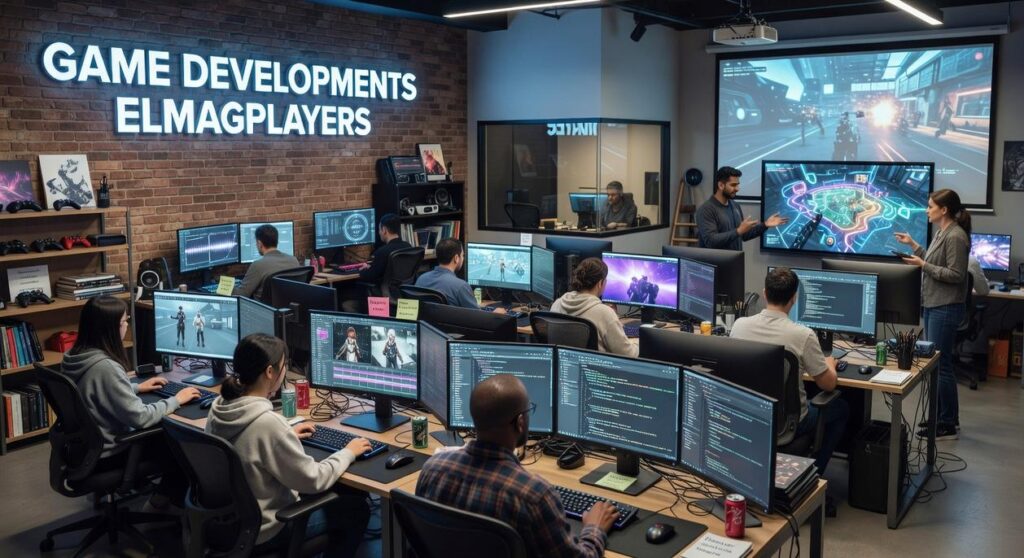
They’re embedded in game developments elmagplayers as consultants. Not just playing. Analyzing.
Pro tip: If you want to think like an Elmagplayer, start recording your sessions and reviewing them specifically for system interactions, not just your performance.
Key Stages of Involvement in the Development Lifecycle
Most articles about game testing focus on what happens during beta. They miss the bigger picture.
I want to show you where game developments elmagplayers actually make the biggest difference. It’s not always where you’d expect.
Pre-Alpha & Alpha: Core Mechanic and Gameplay Loop Validation
This is where the real work happens.
You’re not hunting bugs here. You’re figuring out if the game is actually fun. Does the core loop feel good? Do the mechanics make sense when real people touch them?
I’ve seen studios waste millions because they didn’t catch fundamental design problems early. A combat system that feels clunky. A progression curve that bores players after two hours.
Elmagplayers test these systems when they’re still flexible. When changing them doesn’t mean rebuilding half the game. You identify what works and what doesn’t before those decisions get expensive.
Beta Testing: Stress Testing, Advanced Bug Hunting, and Edge Case Analysis
Now we scale up.
Beta is where you push everything to its limits. How many players can the servers handle before they collapse? What happens when someone tries to break your game on purpose?
Automated tests can’t find everything. They follow scripts. Real players? We do weird things. We click buttons in the wrong order. We try to exploit systems you didn’t know could be exploited.
This phase catches the bugs that would’ve tanked your launch. The ones that only show up when thousands of people are playing at once.
Post-Launch Support: Live Ops, Meta-Balancing, and Content Verification
Here’s what most people don’t talk about.
Launch isn’t the finish line. It’s just the beginning of a different kind of testing.
Players find new strategies. The meta shifts. What seemed balanced in beta becomes broken when millions of people start experimenting. You need people watching the live environment and catching these shifts before they ruin the experience.
New content drops need verification too. That DLC you spent months building? It needs testing in the actual live game environment, not just on a dev server.
The Tangible Benefits for Development Studios

Let me be blunt about something most studios won’t admit.
They’re terrified of bad launches.
And they should be. I’ve watched too many promising games crash and burn because nobody caught the problems early enough.
Here’s what actually happens when you bring in expert players during development.
You save money. Real money. Not the theoretical kind that finance people love to talk about. When game developments elmagplayers catch a broken progression system in beta instead of after launch, you’re not paying your team to rebuild it while angry players review-bomb you.
I’ve seen studios spend six figures patching problems that cost nothing to fix three months earlier. It’s painful to watch.
Some developers argue that early testing slows them down. That it interrupts their creative flow or adds too many voices to the process.
I disagree completely.
Interrupting a bad direction early is the whole point. You know what really kills creativity? Spending eight weeks reworking a feature because you didn’t realize it was fundamentally broken.
Player retention isn’t luck. It’s the result of shipping a game that works. That feels good. That doesn’t frustrate people in the first hour.
Expert feedback gets you there faster. Players stick around when the experience is polished. When the difficulty curve makes sense. When the bugs don’t ruin their progress.
And here’s what I really care about.
Your reputation. Once you blow a launch, you’re fighting uphill for years. But nail it? Ship something stable and enjoyable? People remember that too.
Positive word-of-mouth beats any marketing budget. Always has. A smooth launch builds trust that carries into your next project and the one after that.
That’s not just good business. It’s how you build something that lasts.
Case Study: How Expert Feedback Transformed a Competitive RPG
Ever watched a promising game fall apart because one character was just too strong?
I’ve seen it happen more times than I care to count. A studio pours years into development, only to launch with balance issues that kill the player base in weeks.
This particular RPG almost went down that same path.
The team had something special on their hands. A competitive multiplayer experience with deep mechanics and real skill expression. But their internal playtests kept hitting the same wall.
Certain ability combinations were breaking matches. Players who figured them out first won every time. The rest just got frustrated and quit.
Sound familiar?
Here’s what changed everything.
The Breaking Point
The studio brought in an Elmagplayers team to run focused playtest sessions. Not casual testing. Real competitive scenarios with players who knew how to exploit every crack in the system.
What they found wasn’t pretty.
Three character builds were dominating 80% of matches. New players couldn’t compete. Even skilled testers were getting steamrolled if they didn’t use the broken combinations.
The Turnaround
The Elmagplayers team didn’t just point out problems. They dug into the performance data and mapped out exactly why certain abilities were overtuned.
Here’s what they delivered:
- Detailed reports on every overpowered combination
- Specific tuning adjustments with projected impact
- Follow-up testing to verify the changes worked
The studio implemented the suggestions. Then they tested again. And again.
By launch, the game had something most competitive titles struggle to achieve. Real balance.
The Results
Critics praised the polished gameplay. Players stuck around because matches felt fair. The competitive scene grew fast because skill actually mattered more than knowing which build was broken.
Did the elmagplayers gaming guide by electronmagazine approach guarantee success? No game developments elmagplayers can promise that.
But it gave the studio what they needed most. A fighting chance to launch without the balance disasters that sink so many competitive games.
A Strategic Partnership for a Superior Product
I’ve shown you how involving Elmagplayers in game development changes everything.
Every phase of your project gets stronger when you bring in expert players early. They catch the problems that slip past internal teams.
Here’s the risk that keeps developers up at night: You spend years building a game only to release something unbalanced or buggy. Your reputation takes the hit and players move on.
Elmagplayers solve this problem.
Integrating expert player feedback isn’t a nice-to-have. It’s how you protect your investment and make sure your game reaches its full potential.
The data backs this up. Games that use structured player testing perform better at launch and maintain healthier communities long-term.
Stop thinking of this collaboration as an expense. It’s a critical investment in quality and long-term success.
Your next step is simple: Build player feedback into your development timeline from day one. Make it a core part of your process, not an afterthought.
The difference between a good game and a great one often comes down to this single decision.
 Founder & Chief Visionary Officer
dmitri22 is the driving force behind Elmag Players, shaping its identity as a leading gaming insight platform. With a deep understanding of digital entertainment, he founded the company to bridge creativity and competitive gaming knowledge. His leadership focuses on innovation, strategy, and long-term growth. dmitri22 has a strong background in game analysis and emerging tech trends. He oversees content direction and brand positioning. Passionate about empowering gamers, he ensures Elmag Players remains ahead of industry shifts. His vision continues to guide the platform’s evolution.
Founder & Chief Visionary Officer
dmitri22 is the driving force behind Elmag Players, shaping its identity as a leading gaming insight platform. With a deep understanding of digital entertainment, he founded the company to bridge creativity and competitive gaming knowledge. His leadership focuses on innovation, strategy, and long-term growth. dmitri22 has a strong background in game analysis and emerging tech trends. He oversees content direction and brand positioning. Passionate about empowering gamers, he ensures Elmag Players remains ahead of industry shifts. His vision continues to guide the platform’s evolution.