
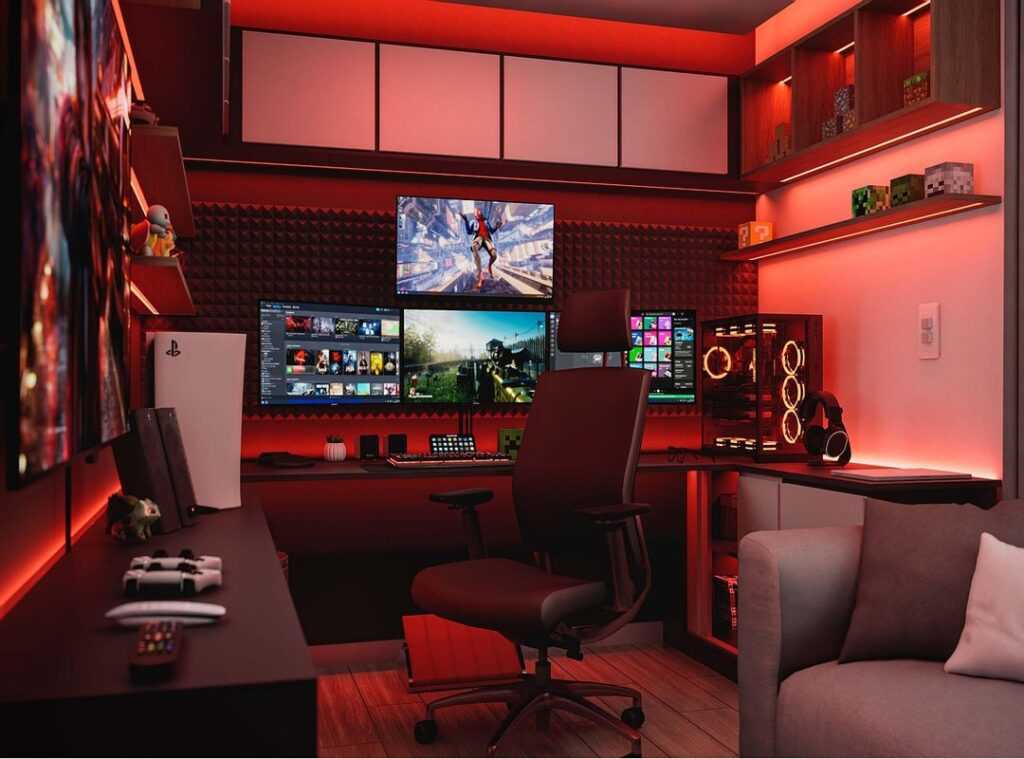
Ever play a game that promises an epic experience but leaves you yawning? It’s frustrating when a title fails to engage, and you’re left wondering what went wrong. The truth is, figuring out what makes a game truly connect with players often feels like a dark art.
I’ve spent years diving into game mechanics and player psychology. I’ve seen both the disasters of design by committee and the brilliance of putting players at the center of the experience.
This article is here to clear up the confusion. I’ll break down effective sound gaming design, sharing data-backed principles that help craft experiences that stick. You want your games to be memorable, not just fun, right?
Let’s explore what really makes a game click, so you can avoid the pitfalls and create something your players will love. Trust me, you’ll be equipped with takeaways that can raise your design game a lot.
Why We Game: The Psychology Behind Engagement
Why do we flock to glowing screens, controller in hand, chasing virtual dragons? It’s not just about the flashy graphics or the sound design. It’s deeper.
It’s about player psychology. We’re wired to be drawn in by the promise of achievement and the thrill of the chase.
Take intrinsic vs. extrinsic motivation. Intrinsic motivation is when you’re playing just because you love the game (who doesn’t enjoy a good RPG?). Extrinsic motivation is when you’re there for the rewards (the) gold coins, the shiny loot.
But the real magic happens in the flow state (that) sweet spot where time melts away and you’re completely immersed. Csikszentmihalyi nailed it with this concept.
Games like “World of Warcraft” or “Fortnite” have mastered the art of anticipation with their reward loops. They know how to keep players returning for that next hit of dopamine. It’s not just about the loot; it’s about making your brain do happy dances.
Pro tip: Identify your target player’s core motivations early in the design process. Want to create engagement that lasts? Focus on what makes players tick.
After all, sound gaming design isn’t just about mechanics; it’s about understanding the psychology behind why we play.
The Invisible Rules: Designing Intuitive Mechanics and Smooth UX
Intuitive design in gaming is like breathing; it should just happen. If players need constant hand-holding, you’ve missed the mark. A game’s mechanics must be clear and consistent, with feedback loops that shout the game state (not whisper).
Sound gaming design means players instinctively know what to do next.
Think about it. Ever rage-quit because a UI was more cryptic than a crossword puzzle? A well-designed user experience (UX) considers menu navigation, control schemes, visual clarity, and even accessibility.
I remember a game where the menu was a labyrinth. By the time I found “Save Game,” I needed a nap.
Now, let’s talk about examples. Ever played a game where every button press felt like magic? That’s what good UX does.
On the flip side, if your tutorial needs a tutorial, there’s a problem. Your players should be conquering worlds, not wrestling with inventory screens.
So how do you design mechanics that feel natural? Start by prioritizing player clarity over designer cleverness. And for more takeaways on this, check out crafting immersive game worlds.
Trust me, it’s worth delving into the details. Because in the end, a smooth UX is the real game-changer.
Walking the Tightrope: Challenge, Reward, and Progression
Let’s get real. Balancing challenge and reward in games is like walking a tightrope. Too much of one, not enough of the other, and you’ve got yourself a mess.
It’s not just about throwing loot at players either. Think about narrative rewards, skill mastery, or even social recognition. I mean, who doesn’t enjoy a little virtual applause?
Now, on to difficulty curves. Linear, spike, changing (it’s) like choosing your fighter. Ever tried a Souls-like game?
It’s punishing but rewarding. Casual mobile games, on the other hand, tend to keep things chill. Different genres, different strokes.
But whatever the genre, if it feels like a chore, players might bolt (unless it’s a farming simulator with chores as its selling point).
Progression is another monster. Games need to make players feel they’re growing. Growing in power, skill, or story.
It’s got to be constant. Like, if you’re not moving forward, you’re falling back. This is where sound gaming design comes into play.
It’s about crafting that perfect loop where players feel accomplished and not just busy.
So, next time you’re gaming, or designing a game, ask yourself: does it balance challenge, reward, and progression? Because that’s what keeps us all hooked, right?
Fail Fast, Learn Faster: The Game Design Loop
Game design isn’t a hit-or-miss kind of deal. It’s an ongoing, messy, and iterative process. You think you’ve nailed it, then a player (probably your cousin) breaks the game with a barrel rolling down a hill.

That’s why playtesting is non-negotiable. It’s the spotlight that reveals flaws your dev team can’t see. You need all types: internal (with developers), external (the public), focused (specific mechanics), and blind testing (no guidance).
Each has its own quirks and surprises.
But here’s the kicker: gathering feedback. It’s like sorting through a mountain of opinions. Some are gold; others, not so much.
The trick is distinguishing between constructive criticism and mere personal preference. You have to be willing to “kill your darlings” (a fancy way of saying make big changes) based on data. This is where sound gaming design thrives.
Need another pro tip? Keep an eye on visual storytelling modern games. They’re getting feedback right by watching how players interact with storytelling elements.
This isn’t just about fixing bugs; it’s about evolving your game into something players will love. So, ready to break your game and make it better?
More Than Pixels: Crafting Worlds and Emotional Impact
Game design isn’t just pixels and mechanics. It’s about creating worlds that players actually want to live in. You know what I’m talking about, right?
The kind of game where you forget it’s just code and polygons. It’s sound gaming design that pulls you into a universe, making you care about pixelated characters as much as real people.
How do they do it? World-building. It’s the lore, aesthetics, even the sound design (yes, that epic soundtrack matters).
A coherent world pulls players in, making them invest emotionally. It’s like how Star Wars wouldn’t be the same without its iconic soundtrack. Imagine a silent lightsaber duel.
Weird, right?
Storytelling is another weapon in the arsenal. From explicit narratives to subtle environmental cues, stories build emotional bonds. Take a game like “Journey”.
It barely has dialogue, yet it speaks volumes. That’s the power of a well-crafted narrative.
Even abstract games can have purpose. Think of Tetris with a tragic backstory for the red blocks. It sounds absurd, but it gives the game personality.
So next time you’re designing, remember: it’s not just about the mechanics. It’s about creating worlds that connect. Isn’t that what makes a game unforgettable?
Crafting Games That Connect
You came here looking for a way to create games that truly connect. You want to avoid the blandness that drives players away.
Sound gaming design isn’t something mystical. It’s about understanding what players want, crafting intuitive systems, and iterating until it feels right.
Take these principles and apply them to your projects. Look at the games you love and the ones that missed the mark. Analyze why they connect or fall flat.
Keep exploring the world of game design. Your next big hit is waiting. Start today and make your games unforgettable.
 Senior Game Analyst & Strategy Specialist
Lirona Duskfield brings depth and precision to Elmag Players through her analytical approach to gaming. She focuses on competitive strategies, mechanics breakdowns, and genre exploration. Her insights help readers understand both casual and high-level gameplay. Lirona has a strong foundation in game design theory and player behavior. She contributes to detailed reviews and strategic guides. Her work supports the platform’s mission of delivering valuable gaming knowledge. Dedicated and detail-oriented, she ensures accuracy and relevance in every analysis.
Senior Game Analyst & Strategy Specialist
Lirona Duskfield brings depth and precision to Elmag Players through her analytical approach to gaming. She focuses on competitive strategies, mechanics breakdowns, and genre exploration. Her insights help readers understand both casual and high-level gameplay. Lirona has a strong foundation in game design theory and player behavior. She contributes to detailed reviews and strategic guides. Her work supports the platform’s mission of delivering valuable gaming knowledge. Dedicated and detail-oriented, she ensures accuracy and relevance in every analysis.